|
|
|
|
Click on a letter above to view the list of gems. |
|
|
|
|
|
Sulphur
(Sulfur) |
|
| Chemistry: S8 [elemental Sulphur] | |
| Discovered
in Prehistory;
IMA
status: Valid (pre-IMA; Grandfathered). | ||
|
| ||
|
Classification |
|
|
| |
|
Elements | |
|
1/O.0-10 | |
|
|
1 : ELEMENTS (Metals and intermetallic alloys; metalloids and
nonmetals; carbides, silicides, nitrides, phosphides) |
|
Related to: |
Sulphur Group. Sulphur - Selenium Series |
|
|
|
|
Crystal Data |
|
|
|
|
|
Crystals dipyramidal, thick tabular and disphenoidal, to 20 cm; also massive, reniform, and forming stalactites; as a powder. |
|
|
On [101], [011], [110], rare. |
|
|
|
|
|
Physical Properties |
|
|
|
|
|
[001] Imperfect, [110] Imperfect, [111] Imperfect; parting on [111] |
|
|
Conchoidal to Irregular/Uneven |
|
|
Brittle to somewhat Sectile |
|
|
1.5 - 2.5 |
|
|
2.07 (g/cm3) |
|
|
None |
|
|
Not Radioactive |
|
|
Other: |
With a low melting point of 113 degrees C. sulphur burns readily in air, with a low blue flame, and gives off choking fumes of sulphur-dioxide - "rotten" egg odor. |
|
|
|
|
Optical Properties |
|
|
|
|
|
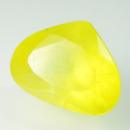
Sulfur-Yellow to Honey-Yellow, Yellowish Brown, Greenish, Reddish or Yellowish Gray; may be Black from included organic matter. |
|
|
Transparent to Translucent |
|
|
Resinous to Greasy |
|
|
1.958 - 2.245 Biaxial ( + ) |
|
|
0.2873 |
|
|
Relatively Weak; r < v |
|
|
Weak to Distinct |
|
|
|
|
|
Occurances |
|
|
|
|
|
Geological Setting: |
A sublimation product at volcanic fumaroles; a product of the activity of biological micro-organisms; as a result of low oxidation potential and highly acidic chemical reactions in mineral deposits; formed by the decomposition of sulfides, especially pyrite, during mine fires; found in sedimentary rocks. |
|
Common Associations: |
Anhydrite, Aragonite, Calcite, Celestine, Gypsum, Halite |
|
Common Impurities: |
Se, Te |
|
Type Locality: |
None (Prehistoric) |
|
Year Discovered: |
Prehistory |
|
View mineral photos: | |
|
|
|
|
More Information |
|
|
|
|
|
| |
|
|
|
|
Sulphur
is available from many sources worldwide although fine
crystal specimens are somewhat rare. Notable occurances
include Michigan and Ohio, USA; Bolivia; Chile; Poland;
and Sicily. |
|
|
We
have not photographed our Sulphur
gems. Please
check back soon. |
